
Using Sound Effects in Advertising: A Complete Audio Guide for Video Creators
Sound effects in advertising can dramatically improve viewer engagement and message retention. Learn how to choose, layer, and time sound effects for video ads across different platforms.
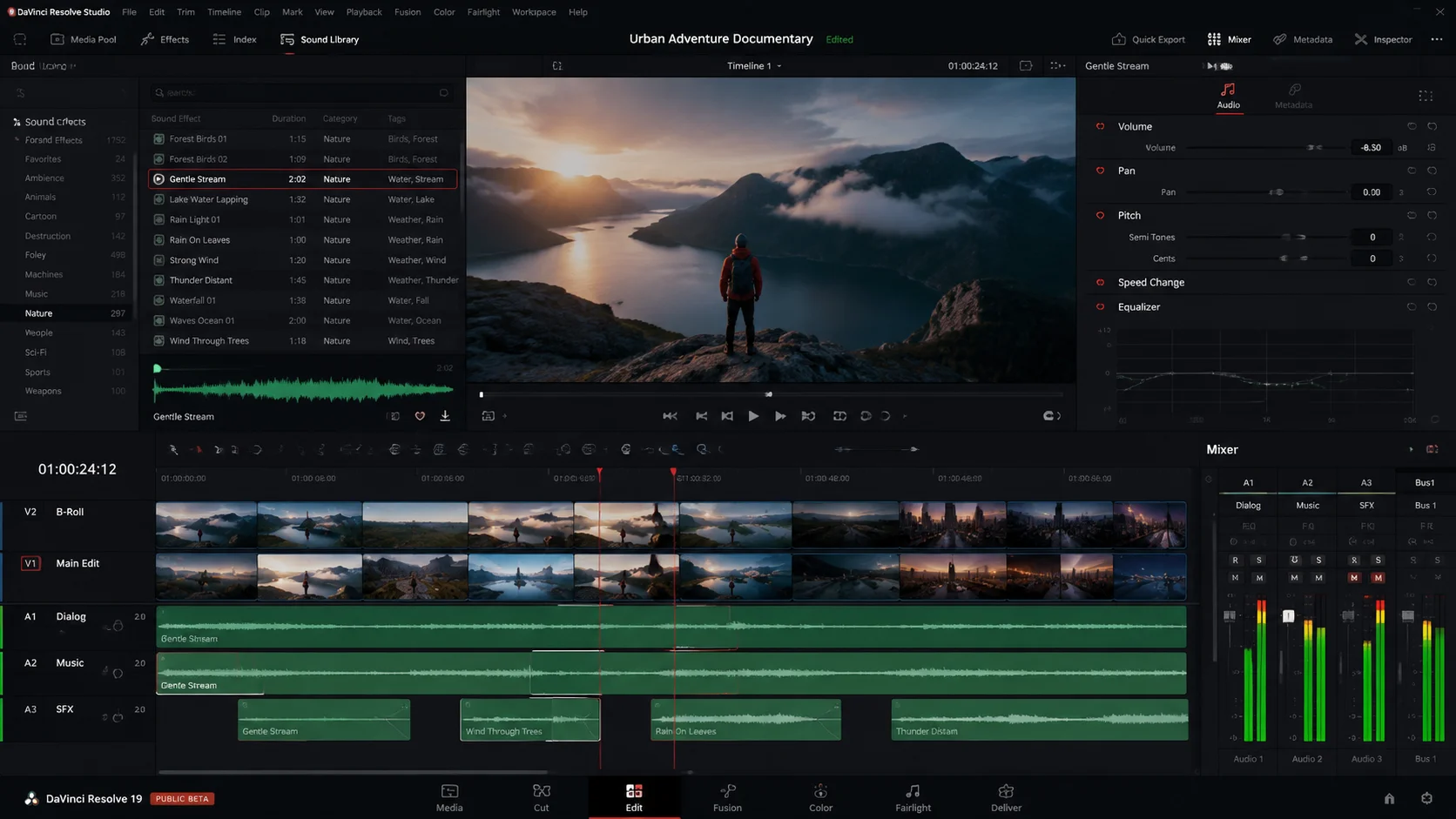
Sound design is the invisible half of every great video ad. Visuals get the credit, but audio does the heavy lifting on emotion, pacing, and attention. A well-placed sound effect can make a product reveal feel bigger, a transition feel smoother, or a joke land harder. Poor sound design, on the other hand, can make an otherwise polished ad feel cheap, confusing, or exhausting to watch. Using sound effects in advertising is not about adding more noise. It is about making intentional choices that support the message and guide the viewer's attention through every second of the spot.
1. Why sound effects matter more than most creators think
Viewers will forgive mediocre video quality more readily than bad audio. A study by the University of Southern California found that viewers rated the same video content as more professional, credible, and engaging when it included well-designed audio compared to an identical video with poor or missing sound design. Sound effects create a sense of physical presence and spatial reality that flat video lacks. They also serve as attention anchors: a sharp sound effect at the start of an ad signals to the viewer's brain that something important is happening, pulling them back from whatever distracted them.
- Viewers judge overall production quality more by audio than by video.
- Sound effects create spatial presence and physical realism.
- Sharp audio cues act as attention anchors that reset viewer focus.
2. The three categories of advertising sound effects
Sound effects in advertising fall into three broad categories. Diegetic sounds come from objects visible on screen: a phone buzzing, a car door closing, footsteps on gravel, a product being unboxed. These sounds ground the visual in reality. Non-diegetic sounds exist outside the scene: whooshes that emphasize text animations, musical stingers that punctuate offers, risers that build tension before a reveal. These sounds shape emotion and pacing. Branded audio signatures are short, distinctive sounds that identify the brand without visuals, like a sonic logo or a consistent transition effect used across all ads in a campaign.
- Diegetic sounds reinforce what the viewer sees and add physical weight.
- Non-diegetic sounds guide emotional response and visual pacing.
- Branded audio signatures build recognition across campaigns.
3. Sound effect layering and the rule of three
A common beginner mistake is using too many sound effects at once, creating a muddy, overwhelming mix. Professional sound designers follow a rule of three: at any given moment, there should be no more than three distinct sound elements competing for attention. One might be the primary foreground effect such as a product interaction sound, one might support the visual transition such as a subtle whoosh, and one might provide ambient texture such as room tone or atmospheric background. Layering more than three elements at once usually reduces the impact of all of them.
4. Timing sound effects to the edit
Sound effects should not be pasted over a finished video edit as an afterthought. The timing of sound effects and visual cuts influence each other. A transition whoosh that starts two frames before the visual cut and ends two frames after creates a smoother, more professional feel than one that is perfectly aligned to the cut frame. Similarly, a product impact sound should hit slightly before the visual to create anticipation, or slightly after to create emphasis. These micro-timing adjustments are what separate amateur sound design from professional work.
- Lead sound effects 2-4 frames before the visual cut for smoother transitions.
- Delay impact sounds 1-3 frames after the visual for emphasis.
- Sync dialogue and lip movement precisely; foley has more flexibility.
5. Platform-specific sound design considerations
Sound design decisions should account for the viewing environment. A YouTube pre-roll ad will be heard through speakers or headphones in a relatively attentive context. An Instagram Stories ad will often be watched on a phone without sound, making captions and visual pacing more important than audio details. A connected TV ad will play through television speakers in a living room, making low-end frequencies and spatial effects more impactful. Design your sound mix for the platform where most viewers will see the ad, and test the mix on representative hardware before final export.
- Social mobile ads need strong visual storytelling as many viewers watch muted.
- Connected TV ads benefit from richer bass response and wider dynamic range.
- Pre-roll ads should have a clear audio hook within the first two seconds.
6. Building a reusable sound effects library
Agencies and content teams that produce ads regularly benefit from building an organized sound effects library. Start with high-quality royalty-free sources, organize by category (transitions, impacts, environments, UI sounds, branded signatures), and tag each file with keywords, duration, and mood. Having a curated library means that sound designers and editors can audition effects quickly during the edit rather than searching stock sites for every new project. The time saved compounds across projects and allows more of the production budget to go toward creative refinement rather than asset hunting.
FAQ
Where can I get royalty-free sound effects for advertising?
Several platforms offer royalty-free sound effects with commercial licenses suitable for advertising, including Epidemic Sound, Artlist, Soundstripe, and the YouTube Audio Library. Always verify the license terms for commercial use in advertising before using any sound effect.
How many sound effects should a 30-second ad have?
There is no fixed number, but a well-designed 30-second ad typically uses 8-15 distinct sound effects distributed across the timeline. The key is intentionality: every effect should serve a specific communication purpose.
Can AI help with sound effects placement?
Yes. AI video editing platforms can analyze scene changes, text animations, and visual transitions to suggest and place appropriate sound effects automatically. Human review is still needed to adjust timing and select the right effect character, but AI can handle the initial placement work.