
AI Radio Ad Script Generator: Write Broadcast Copy That Converts in Minutes
An AI radio ad script generator helps writers and marketers produce polished 15, 30, and 60-second broadcast scripts faster without sacrificing audio storytelling craft.
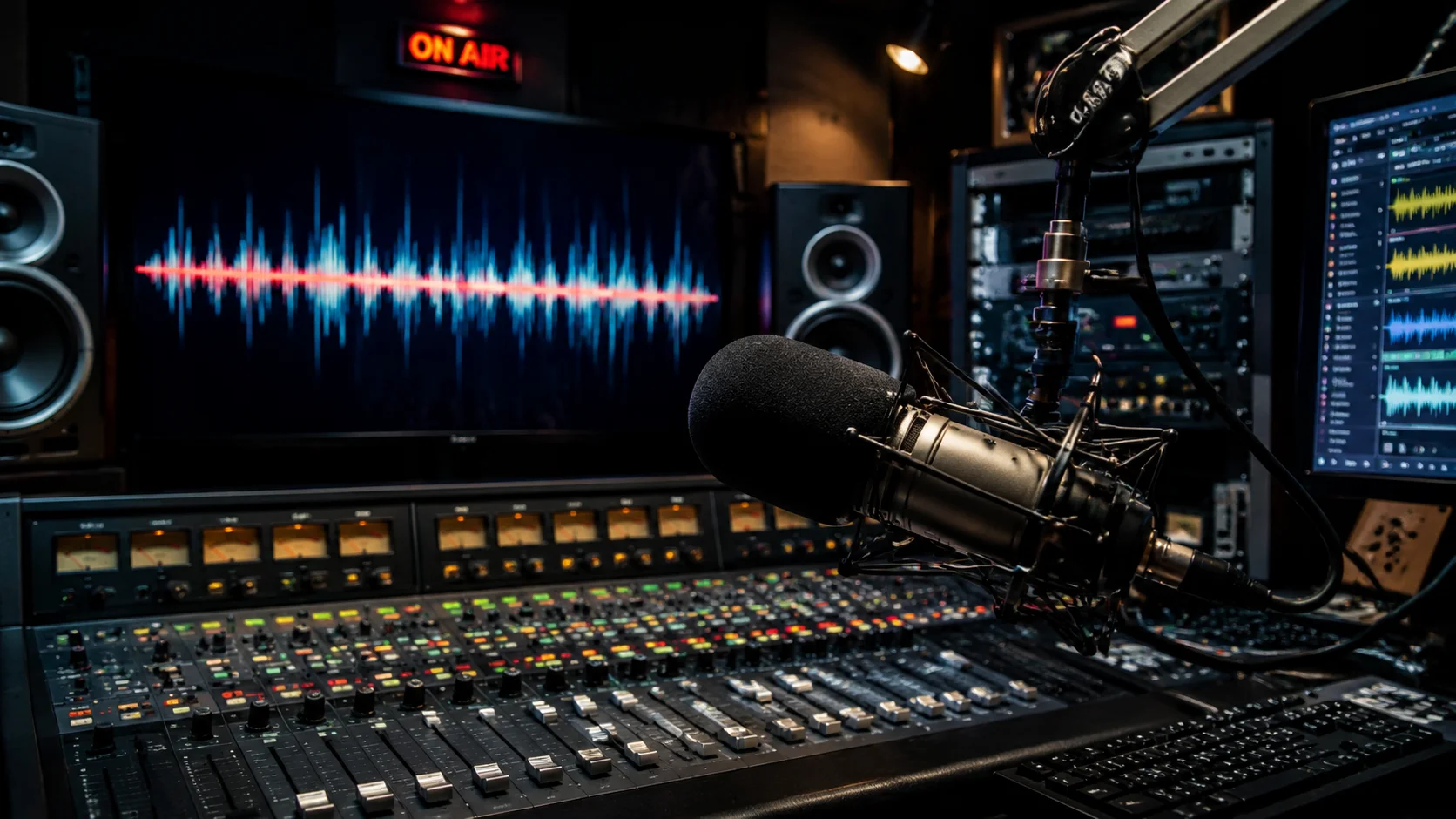
Radio advertising occupies a narrow bandwidth: you have 30 or 60 seconds of audio, no visuals, and a listener who is probably driving, cooking, or doing something else. Every word has to carry weight. The challenge is that writing tight, conversational broadcast copy is a specific craft, and most teams do not have a dedicated radio copywriter on staff. AI script generators close that gap, but only if you feed them the right inputs and know how to edit what comes back.
1. Why radio copy is harder than it looks
Print and digital copy can use visuals, bullet points, and white space to help readers parse meaning. Radio copy only has voice, pacing, and the listener's imagination. Sentences that look fine on paper often land awkwardly when read aloud: too many syllables in a row, a product name that breaks the rhythm, or a call to action that arrives before the listener is ready.
- Sentences longer than 15 words slow down listener comprehension.
- Repeated hard consonants can make a voice talent stumble live.
- The call to action needs to come at least twice: once mid-spot, once at close.
2. What a good AI radio ad script generator needs from you
Generic prompts produce generic copy. Before you ask an AI tool to write your spot, prepare three inputs: the single message the ad must land, the tone that matches the station format (drive time, news, country, CHR), and any legal or offer-specific text that must appear verbatim. The better your brief, the less editing the output needs.
3. Structure that works for 30-second spots
The most reliable 30-second structure opens with a problem or relatable moment (five seconds), identifies the brand and solution (ten seconds), delivers proof or offer (ten seconds), and closes with a clear call to action (five seconds). AI generators produce stronger copy when you give them this structure as a constraint rather than asking for freeform output.
- Open with the listener's situation, not the brand name.
- Put the URL or phone number in the last eight seconds.
- One offer per spot, not three with conditions attached.
4. Editing AI output for broadcast read
After the generator produces a draft, read it aloud at broadcast pace. Time it with a stopwatch. Mark any sentence that sounds written rather than spoken, any phrase longer than natural speech, and any moment where the pacing stalls. Broadcast copy is finished when the voice talent can read it in one take without stumbling.
5. ClipMind for audio-first production workflows
If you are producing a radio spot that includes real interview clips, customer testimonials, or voiceover segments, ClipMind's reverse script workflow can help you structure the audio story before you write the final copy. Upload your source audio as a video file, review the transcript and scene markers, then build the spot structure from actual quote material.
- Customer testimonials become quotable proof points in the script.
- Interview clips can anchor the opening problem statement.
- Timestamped transcript makes it easy to find the right soundbite every time.
6. Testing and iterating on copy quickly
The best radio teams treat the first AI draft as a baseline, not a finished product. Write two or three variations with different openings or different tone registers, record rough reads on your phone, and compare them before sending to production. AI generators make this fast: the cost of trying a new direction drops to minutes, not hours.
FAQ
Can AI write a radio ad script without a brief?
It can produce something, but without a single message, target tone, and offer details, the output is likely to be generic. A two-minute brief produces dramatically better scripts than an open-ended prompt.
How long should a radio ad script be for a 30-second spot?
Approximately 70 to 80 words read at a natural conversational pace. Fast-talking drive-time spots can push to 90 words, but clarity usually drops above that threshold.
Does AI replace a radio copywriter?
No. AI handles first-draft generation and variation testing. The copywriter's job shifts to briefing, editing for broadcast read, and making brand and tone judgments that a generator cannot make.