
Producing Commercial Videos with AI: Streamlined Workflows for Agencies and Brands
AI is transforming how agencies and brands approach producing commercial videos, from first script draft to final export and platform-specific variants.
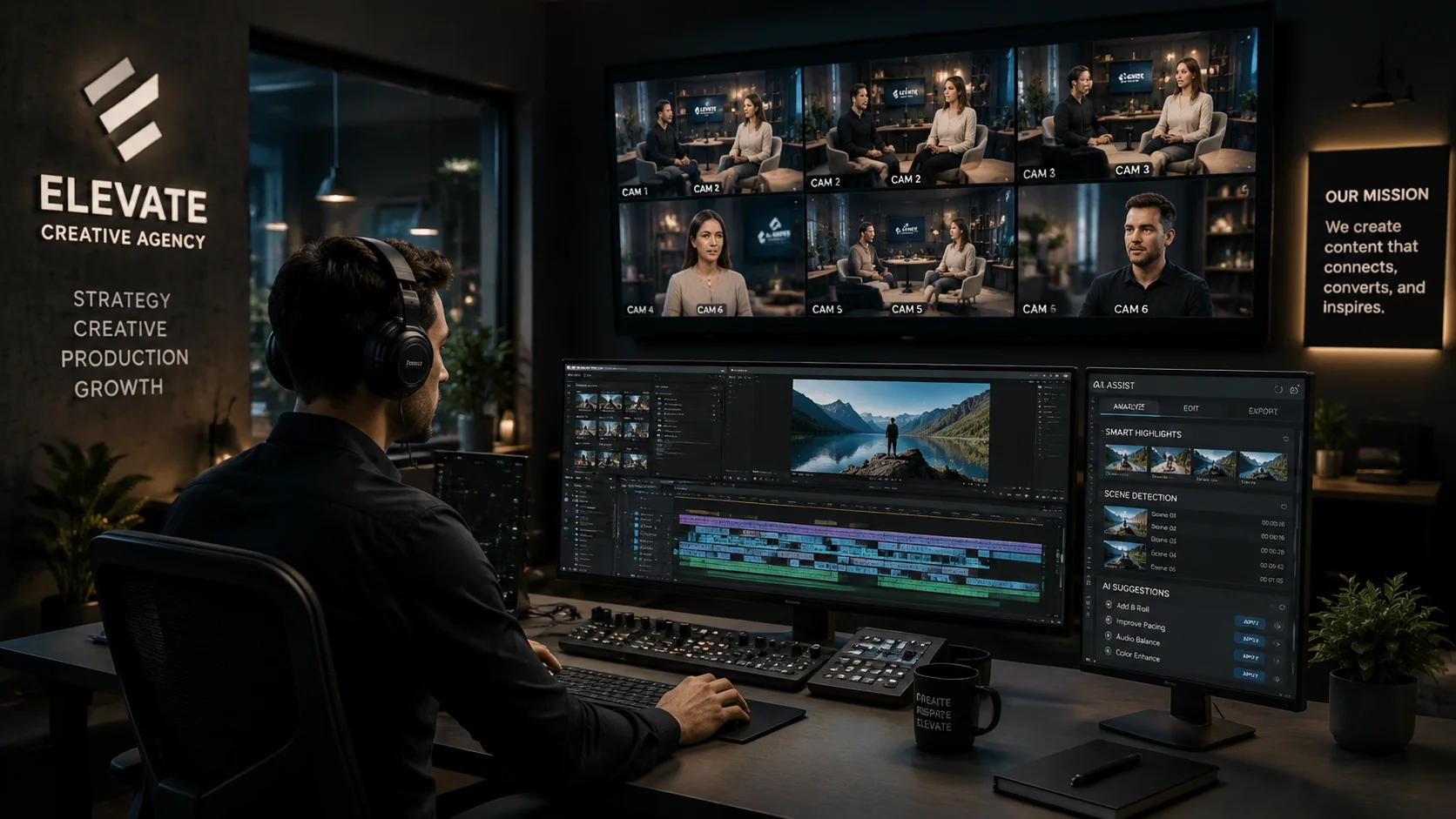
Producing commercial videos has historically been a high-friction process. Agency briefs turn into creative concepts. Concepts turn into scripts. Scripts need storyboards, casting, location scouting, shooting schedules, editing rounds, color grading, sound mixing, and final delivery in a dozen different aspect ratios and durations. Each handoff introduces delay, cost, and the risk of creative drift. AI is not replacing the creative team, but it is collapsing the most repetitive parts of commercial video production into faster, more predictable workflows. The agencies and brands that understand where AI fits into their production pipeline are delivering more content, at higher quality, with shorter turnaround times.
1. The traditional commercial production timeline problem
A typical 30-second commercial can take four to eight weeks from brief to final delivery, even for relatively simple productions. The longest phases are not the creative ideation or the actual shoot. They are the revision cycles: script revisions between agency and client, edit revisions between editor and creative director, and format adaptations for different distribution channels. Each revision cycle adds days to the timeline, not because the work is difficult, but because teams are waiting for availability, feedback, and file transfers.
- Revision cycles account for 50-70% of commercial production timelines.
- File transfers and version management create coordination overhead.
- Platform-specific format adaptations are often treated as afterthoughts.
2. Where AI accelerates commercial video production
AI is most effective in the production phases that are rule-based and repetitive, not in the creative phases that require taste and judgment. Script structure checking and timing calculations can be automated. Rough-cut assembly from tagged source footage can be AI-generated as a starting point for the editor. Platform-specific aspect ratio reframing can be automated with AI scene detection that keeps the important action in frame. Caption generation for social versions can be handled by speech-to-text with timing alignment. None of this removes the need for creative direction, but it reduces the hours spent on mechanical tasks.
- AI rough-cut assembly gives editors a working timeline to refine rather than build from scratch.
- Automated reframing preserves key visual elements across aspect ratios.
- Speech-to-text captioning with timing alignment saves hours of manual subtitle work.
3. Script to storyboard: closing the gap between words and visuals
One of the most valuable AI applications in commercial production is bridging the gap between script approval and visual production. When a client approves a script, they are approving words. But production decisions require visuals. AI tools can now generate rough storyboard frames from script descriptions, giving directors, DPs, and clients a shared visual reference before any camera is rented. These AI storyboards are not final production art, but they reduce the misalignment that happens when different stakeholders imagine different visuals from the same script description.
4. Shot selection and assembly with video understanding
After a shoot, the editor typically faces a mountain of footage. A single commercial shoot might produce two to four hours of source material for a 30-second final cut. AI video understanding can scan this footage, identify takes, flag the best performances based on criteria like focus, framing, and delivery, and group shots by scene and setup. The editor receives a structured map of the footage rather than a flat folder of files. This cuts the initial logging and selection phase from hours to minutes.
- AI identifies best takes by analyzing focus, framing, and performance.
- Scene grouping makes multi-setup shoots navigable in minutes.
- Editors start creative work sooner because mechanical sorting is handled.
5. Version management and client review
Commercial production involves multiple stakeholders: the brand team, the agency creative director, the account manager, and sometimes legal review. Each round of feedback produces a new version, and version confusion is a common source of delay and error. AI-integrated production platforms can track which clips, audio tracks, color grades, and text overlays are used in each version, making it easy to compare versions, roll back to earlier states, and ensure that the final export contains exactly what was approved.
6. Platform adaptation as part of the core workflow
The traditional approach treats platform adaptation as a separate post-delivery step: the main edit is done in 16:9, and then someone creates vertical, square, and short versions. AI makes it practical to design for all formats from the start. When the editor works in an AI-assisted timeline, the system can maintain awareness of safe zones for different aspect ratios, suggest where reframing will work well, and flag shots that will need alternative framing for vertical delivery. This upstream thinking prevents the common problem of beautiful 16:9 shots that lose all meaning when cropped to 9:16.
- Design for multiple formats during the primary edit, not as an afterthought.
- AI can maintain safe-zone awareness across aspect ratios in real time.
- Flag shots that will break in vertical format early, before the edit is locked.
FAQ
Will AI replace commercial video production teams?
No. AI handles mechanical and repetitive tasks such as rough assembly, format reframing, and version tracking. Creative direction, performance selection, storytelling judgment, and brand voice decisions still require experienced human producers and editors.
How much time can AI save on a typical commercial production?
Agencies using AI-integrated production workflows report 40-60% reduction in post-production time, primarily from faster logging, rough-cut assembly, caption generation, and multi-format export. Pre-production time savings from AI storyboarding and script analysis typically range from 20-30%.
What types of commercials benefit most from AI production tools?
Social media ads, product demos, testimonial videos, and multi-format campaign assets see the largest gains because they require many versions from the same source footage. High-concept narrative commercials with complex VFX still rely more heavily on traditional post-production pipelines.