
Podcast Editing Workflow Optimization With AI Video Understanding
Podcast editing is repetitive: remove filler words, level audio, cut tangents, and export multiple formats. AI video understanding can automate the tedious parts so editors focus on content decisions, not mechanical tasks.
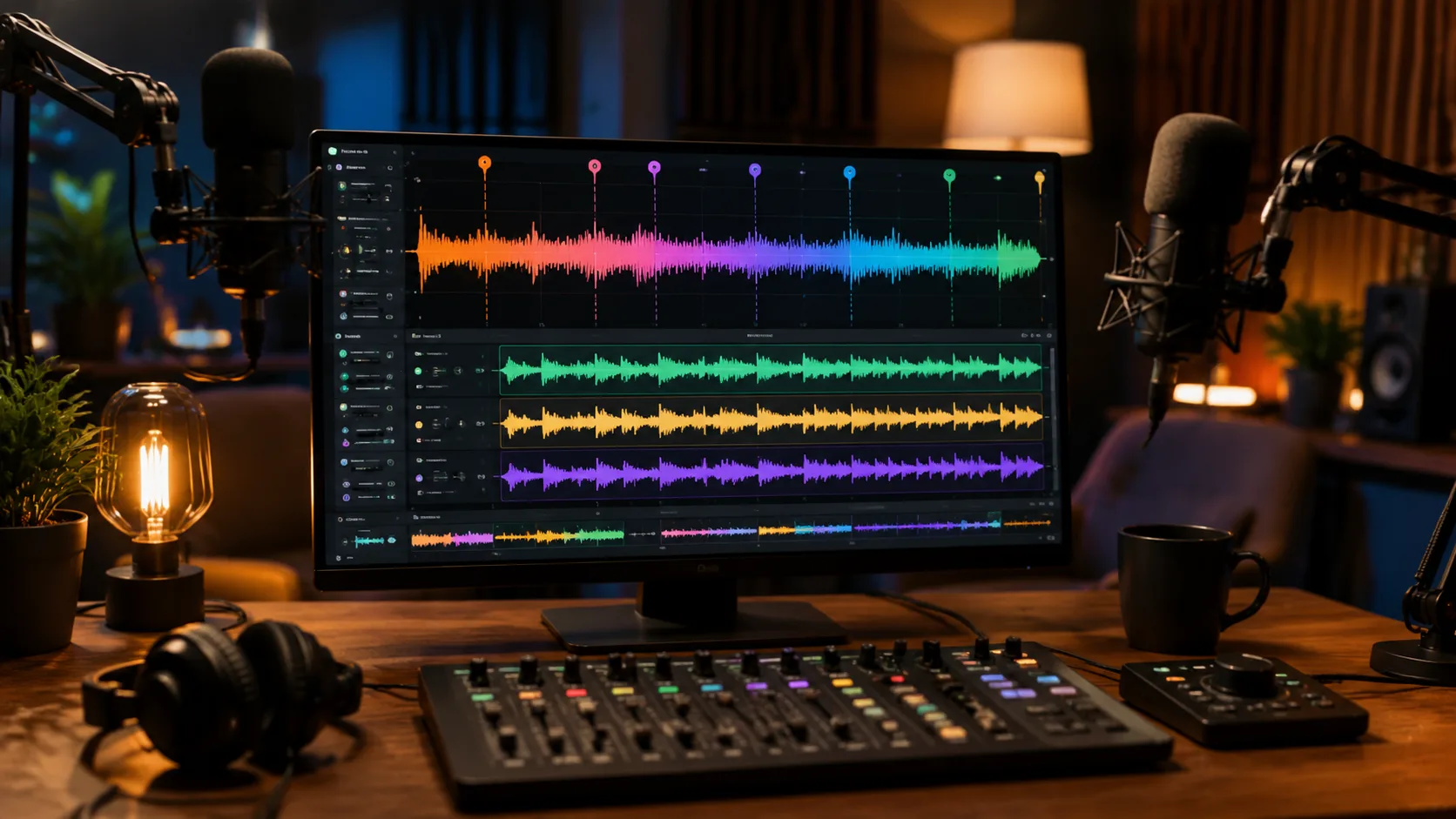
Podcast production follows a predictable pattern: record, transcribe, edit, mix, and publish. The editing phase consumes the most time because it is still largely manual. Editors scrub through hours of audio, identify cuts, adjust levels, and export versions for different platforms. AI video understanding applies to audio-first content too, transforming raw recordings into structured, editable material before human judgment is required.
1. The bottleneck is not mixing, it is selection
Most podcast editors can mix and master quickly. The slow part is deciding what to cut: filler words, off-topic tangents, dead air, and redundancy. AI transcription helps, but transcripts alone do not show which sections are worth keeping. Video understanding maps the structure of the conversation, identifying topic segments, speaker turns, and energy shifts.
- Topic segmentation replaces manual chapter marking.
- Speaker turn detection highlights where conversations shift.
- Energy analysis flags low-engagement sections for review.
2. From transcript to structured edit plan
Upload your podcast audio or video to a ClipMind project. The system produces a reverse script that organizes the conversation by topic, not just chronology. Instead of reading a flat transcript, you see a structured outline: what was discussed, when, and by whom. Edit decisions become about structure, not word-by-word scrubbing.
3. Automate what can be automated
Filler word detection, silence removal, and level normalization can be partially automated. Let AI handle the mechanical cleanup so human editors can focus on content choices: which tangents strengthen the episode, which jokes land, and which segments deserve expansion or condensation.
4. Multi-format export from one edit
Podcasts increasingly need multiple outputs: full episode, highlights for social, audiogram clips, and written summaries. Build the master edit once with AI-assisted understanding, then derive shorter versions by selecting topic segments from the structured output. One production cycle yields multiple distribution assets.
5. Preserve the conversation feel
Over-edited podcasts sound artificial. The goal is not to remove every imperfection but to remove what distracts from the conversation. AI tools can flag candidates for removal, but human editors should make final decisions about what keeps the episode feeling natural.
- Keep natural pauses that signal thought or emphasis.
- Preserve spontaneous moments that humanize the speakers.
- Cut only what genuinely reduces clarity or engagement.
6. Build a workflow that scales
For shows with recurring formats, standardize the workflow: upload, review the reverse script, make edit decisions, export. The more consistent the process, the faster each episode moves through production. Use the same project structure for every episode so understanding outputs follow a predictable pattern.
FAQ
Can AI fully automate podcast editing?
Not yet. AI can handle cleanup and structure detection, but content decisions still require human judgment. The optimization is in reducing mechanical work, not replacing editorial taste.
What file formats work with podcast understanding?
Audio and video files in standard formats. ClipMind processes uploads for dialogue extraction and scene detection regardless of whether the source is audio-only or video podcast.
How much time does AI-assisted editing save?
Editors report thirty to fifty percent time savings on selection and cleanup tasks. The biggest gains come from structured discovery replacing manual scrubbing through long recordings.