
Music Video Treatment Examples And How AI Speeds Them Up
Music video treatment examples are useful as references, but they only help if you can turn them into a structured plan. Here is a workflow that uses AI video understanding to move from references to a real treatment.
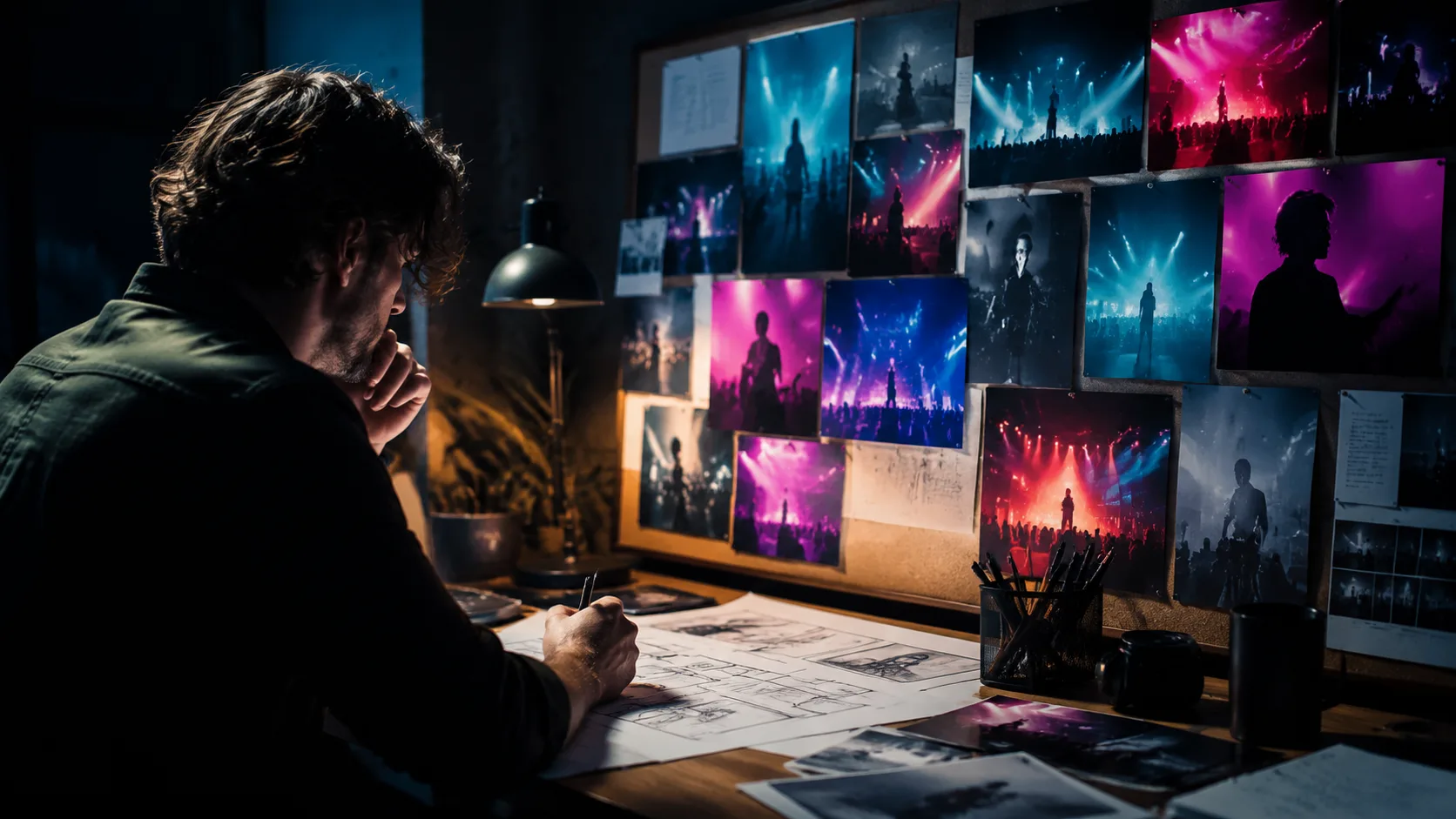
A music video treatment is a sales document. Its job is to convince an artist, a label, or a brand that a director sees a clear film inside a song. Most directors learn treatments by studying examples: tone boards, scene-by-scene breakdowns, character notes, and one-line concept hooks. Examples are easy to find. Turning them into your own treatment under deadline is the hard part. Video understanding tools shorten the loop between watching references and producing your own.
1. What a strong treatment usually includes
Most successful music video treatments share a structure: a concept paragraph, a tone or look section, a beat-by-beat sequence outline, a character or world note, and a list of practical considerations. Treatments that win pitches tend to be visually specific and emotionally clear, not vague.
- Concept hook in one sentence the artist can repeat.
- Three to five tone references with reasoning, not just images.
- Sequence outline tied to song sections such as verse, chorus, bridge.
2. Use references as inputs, not outputs
Directors often collect tons of stills and clips, then never structure them. Drop your reference videos into a ClipMind project and let the system tag scenes, lighting moods, camera moves, and recurring objects. Suddenly your reference library is searchable, and your treatment can quote specific moments instead of generic vibes.
3. Build the beat-by-beat against the song
Pull the song into the same project alongside reference clips. ClipMind aligns dialogue and key frames with timestamps, so you can map verse, pre-chorus, chorus, and bridge into your treatment. Each beat carries the references that inspired it, which is far stronger than a flat mood board.
- Verse one: setting and character introduction.
- Chorus one: visual peak that defines the look.
- Bridge: emotional turn or reveal.
4. Write the concept paragraph last
Most directors write the concept paragraph first and then bend everything to fit it. Reverse that order: build the beats, look, and references first, then write a one-paragraph concept that summarizes them. The result feels grounded because it is grounded in the structure you already have.
5. Include practical notes the team will actually read
Add a section on locations, casting, wardrobe, lighting, and rough day breakdown. Artists and labels rarely greenlight treatments that ignore execution. Treatments that win the budget look both ambitious and shootable, and AI tools help you cross-check whether your references are realistic.
6. Reuse the project across pitches
Treatments are rarely one-off. Even if you do not win a pitch, the structured references and beat ideas live on. Keep the ClipMind project so the next pitch starts from a library instead of a blank page, and reuse beat structures that proved strong in past presentations.
FAQ
How long should a music video treatment be?
Three to six pages of structured content is usually enough. Anything longer tends to lose the artist's attention, and anything shorter rarely contains enough specifics to justify a budget.
Do I need polished mood images for every beat?
Not always. Specificity beats polish. A short clip reference with a one-line note on why it matters is often more convincing than ten beautiful stills with no reasoning.
Can AI help with the writing too?
It can help you summarize references into clean paragraphs, but the voice and emotional reading of the song should come from the director. Use AI for structure and references, not for taste.