
AI Video Dubbing and Translation: Reach Global Audiences Without Reshooting
AI dubbing and translation tools let you localize video content into multiple languages automatically. Learn how ASR, translation models, and TTS combine to create multilingual video versions that sound natural.
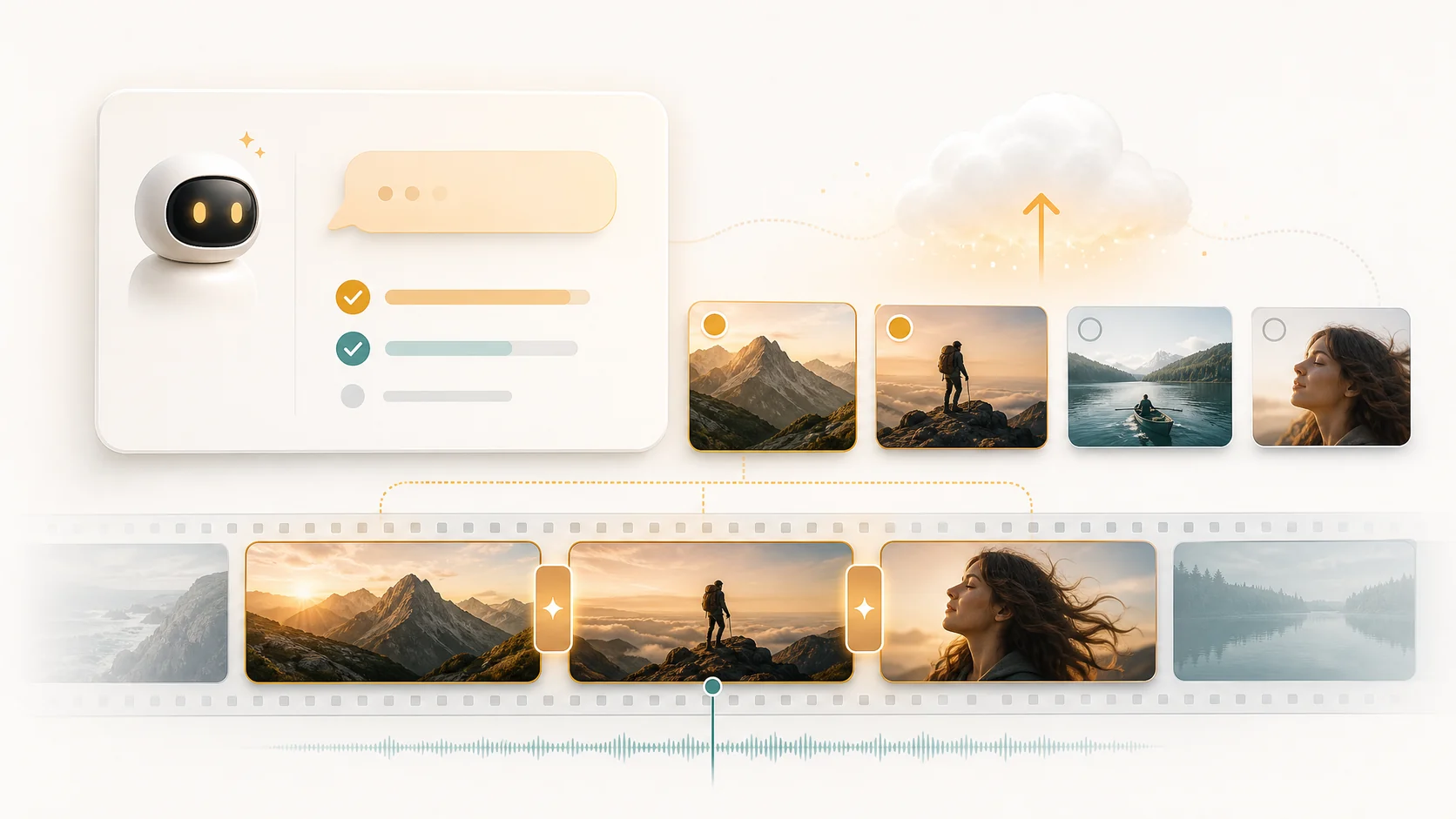
Your video performs well in English, but 75 percent of the world does not speak English as their first language. Traditional dubbing requires hiring voice actors for each language, booking studio time, and managing complex lip-sync adjustments. AI dubbing collapses that process into a single automated pipeline: transcribe the source audio, translate the transcript, generate new voice audio in the target language, and synchronize it with the video timeline. The result is a multilingual version of your content that feels native to each audience, produced in hours instead of weeks.
1. The AI dubbing pipeline: from source language to target voice
AI dubbing follows a four-stage pipeline. First, ASR transcribes the source audio into time-aligned text with speaker labels. Second, a translation model converts the transcript into the target language, preserving meaning, tone, and cultural context. Third, TTS generates new voice audio in the target language that matches the original speaker's vocal characteristics through voice cloning. Fourth, the new audio is aligned with the video timeline, adjusting timing to match visual cues where possible. ClipMind integrates these stages into a single workflow that handles multiple target languages simultaneously.
- ASR extracts time-aligned source transcripts with speaker attribution.
- AI translation preserves meaning, tone, and cultural nuance across languages.
- Voice cloning generates target-language audio matching the original speaker's voice.
- Timeline synchronization aligns dubbed audio with visual cues and scene changes.
2. Translation quality: beyond word-for-word conversion
Good dubbing translation is not literal. Languages differ in sentence length, word order, idioms, and cultural references. A joke that lands in English may fall flat in Japanese. A direct translation might be twice as long as the original, breaking the timing. Modern AI translation models are context-aware, considering the surrounding dialogue, speaker identity, and scene context when generating translations. They can also be instructed to prioritize timing constraints, producing translations that fit within the original speech duration. ClipMind's translation layer uses context from the reverse script to ensure translations respect the narrative structure of the source video.
- Context-aware translation considers surrounding dialogue and scene context.
- Timing-constrained output produces translations that fit original speech durations.
- Cultural adaptation handles idioms, humor, and references appropriate to each market.
3. Voice cloning: keeping the speaker's identity across languages
A dubbed video where every character sounds completely different in each language breaks immersion. Voice cloning solves this by creating a voice model from the original speaker's audio, then generating new speech in the target language that preserves their vocal identity: timbre, pitch range, speaking style, and emotional delivery. The same speaker sounds like themselves whether speaking English, Chinese, or Spanish. Technologies like CosyVoice support cross-lingual voice cloning, where a voice model trained on one language can generate speech in another while maintaining vocal consistency.
- Voice cloning preserves speaker timbre, pitch, and style across languages.
- Cross-lingual models generate speech in new languages from single-language training.
- Emotional delivery transfers across languages for natural-sounding dubbed dialogue.
4. Bilingual content: the first step toward multilingual
You do not need to dub into ten languages at once. Many creators start with bilingual content, adding a second language version of their most popular videos. ClipMind was built with bilingual workflows in mind, supporting English and Chinese natively throughout the pipeline. The same project structure that handles single-language understanding feeds directly into bilingual dubbing. Start with your primary language, generate a dubbed version in your second target language, review both in the same project, and export language-specific versions. This approach lets you test international markets without a massive upfront investment.
- Start bilingual before expanding to multiple languages.
- Same project structure handles source and dubbed versions side by side.
- Review and export language-specific versions from a single project.
5. When AI dubbing works best and where human review matters
AI dubbing achieves excellent results for informational, educational, corporate, and documentary content where precise lip-sync is not the primary concern. For creative content with heavy emotional nuance, wordplay, or culturally specific humor, human review remains important. The most efficient workflow uses AI for the first pass, generating a complete dubbed audio track, then brings in human reviewers to check translation accuracy, cultural appropriateness, and emotional delivery. This hybrid approach combines the speed of AI with the judgment of human experts, producing professional results at a fraction of traditional dubbing cost.
- Best for informational, educational, corporate, and documentary content.
- Human review recommended for creative content with cultural nuance or humor.
- Hybrid workflow: AI first pass plus human QA for professional results.
FAQ
How natural does AI-dubbed content sound?
Modern TTS with voice cloning produces speech that is difficult to distinguish from human voiceover in clean studio conditions. The main remaining gap is lip-sync precision, which is less critical for off-screen narration and interview-style content.
Can I dub a video into a language the original speaker does not speak?
Yes. Voice cloning extracts the speaker's vocal characteristics and generates new speech in any supported target language. The speaker sounds like themselves speaking the new language.
How many languages can I dub into at once?
ClipMind can process multiple target languages from a single source video. The pipeline generates separate dubbed versions for each language, which you can review and export independently.
Is AI dubbing cheaper than traditional dubbing?
Yes, typically 80 to 95 percent less expensive than traditional dubbing with voice actors, and turnaround time is hours instead of weeks.