
AI Agents Reliability In Video Editing Workflows: What Actually Works
The latest research on AI agents shows they struggle with long, multi-step workflows. For video editing, this means human oversight is still essential. Here is how to use AI agents effectively without trusting them blindly.
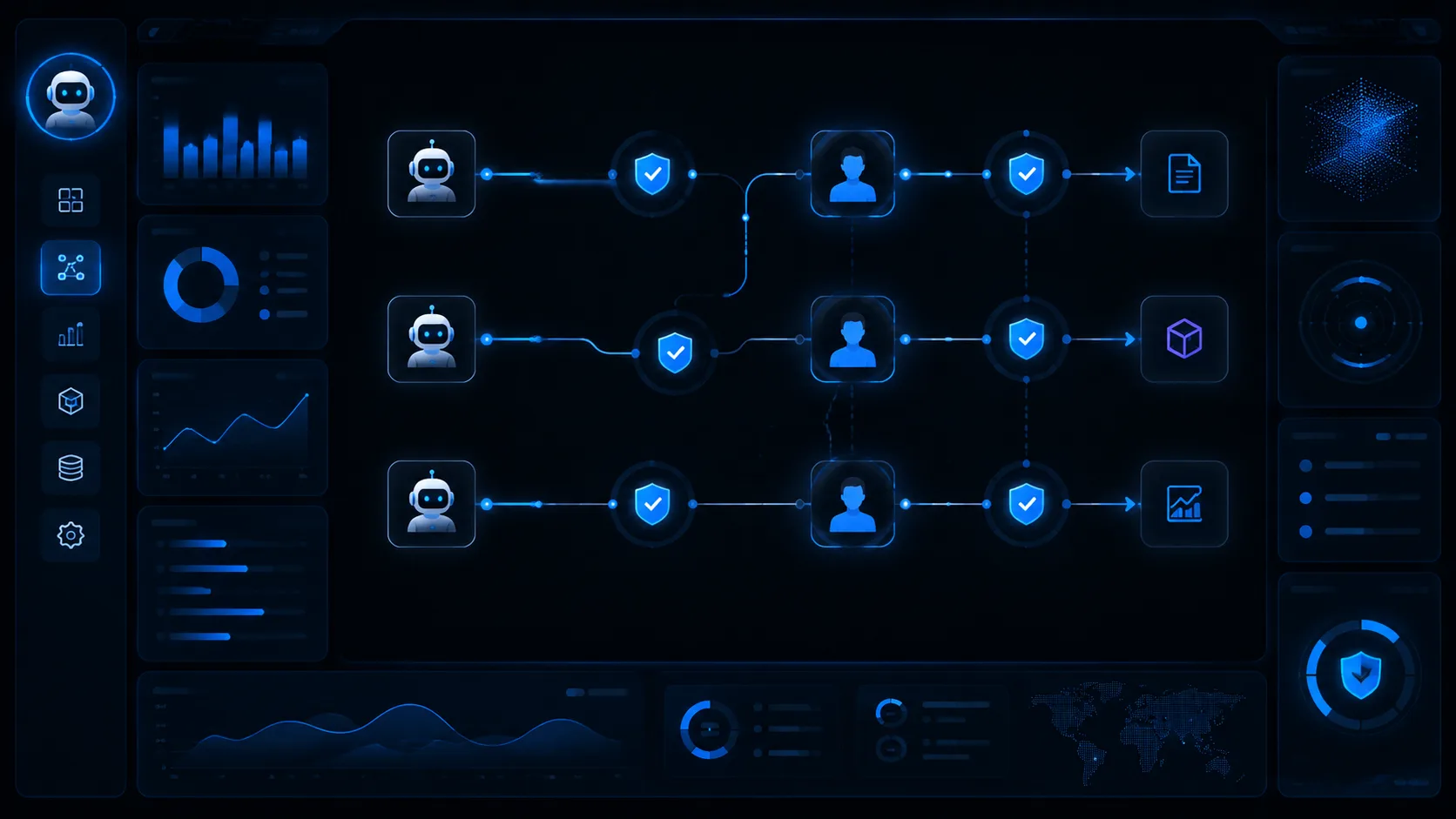
AI agents are having a moment. Google I/O 2026 positioned this as the year of agentic AI. Anthropic and OpenAI are racing to build systems that can complete multi-step tasks autonomously. But a recent Microsoft study reinforced what video editors already know: agents are unreliable in long, complex workflows. They break things, hallucinate rules, and accumulate errors. For video production, the lesson is clear: use agents for acceleration, not autonomy.
1. What the reliability research actually shows
The Microsoft study found that even frontier models struggle with long-horizon tasks. Tools sometimes make performance worse. Documents get corrupted. Errors compound across steps. For video workflows that span ingest, understanding, selection, assembly, and export, this is a real risk. An agent that silently mislabels scenes or loses sync between audio and video creates cleanup work that defeats the time savings.
- Agents excel at single-step tasks: classify, summarize, extract.
- Agents struggle with multi-step chains where each step depends on the last.
- Human checkpoints between phases prevent error accumulation.
2. Where AI agents work well in video production
Agents are excellent at bounded, well-defined tasks: scene detection, transcription, entity identification, and first-pass selection. ClipMind uses AI understanding to map footage into a structured reverse script. This is a single-step task with a verifiable output. The agent does the heavy lifting of watching and tagging, then hands off to a human for judgment.
3. Where you should not trust agents yet
Agents should not make final edit decisions without review. They do not understand brand nuance, emotional pacing, or the difference between a good cut and a great one. They cannot reliably assess whether a speaker pause is intentional or awkward. They should propose, not decide. The human editor remains the creative authority.
4. Designing workflows with human checkpoints
The safest agent-assisted workflow inserts human review at natural breakpoints: after understanding, after first assembly, after narration sync. Each checkpoint catches errors before they cascade. The agent does the tedious work between checkpoints, the human does the judgment work at each checkpoint. Speed comes from reducing tedious work, not eliminating human judgment.
- Checkpoint after understanding: verify scene labels and dialogue mapping.
- Checkpoint after assembly: confirm narrative structure and pacing.
- Checkpoint after narration: check sync and emotional fit.
5. The future of agentic video tools
Google, Anthropic, and OpenAI are all investing in more capable agents. The systems will get better at long-horizon tasks. But the pattern is already clear: the most valuable tools will be those that combine agent speed with human control. Fully autonomous video editing is not coming soon. Agent-accelerated editing with human direction is here now.
6. Practical recommendations for teams
Audit your current workflow. Identify which steps are tedious and bounded, and which require judgment and taste. Deploy agents on the tedious steps with clear success criteria. Keep judgment steps in human hands. Measure the time saved without measuring the errors introduced. Reliability matters more than speed.
FAQ
Are AI agents reliable enough for video editing?
For specific tasks like scene detection, transcription, and initial selection, yes. For end-to-end autonomous editing, no. The technology works best when agents accelerate bounded tasks and humans retain creative control.
What is the biggest risk with AI agents in production?
Error accumulation. A small mistake in an early step can cascade through subsequent steps. Without human checkpoints, these errors compound until the final output is unusable.
How should teams evaluate AI agent tools?
Test on real work with human review. Measure both time saved and errors introduced. A tool that saves time but creates cleanup work is not a net benefit. Look for tools that keep humans in the loop at judgment points.